

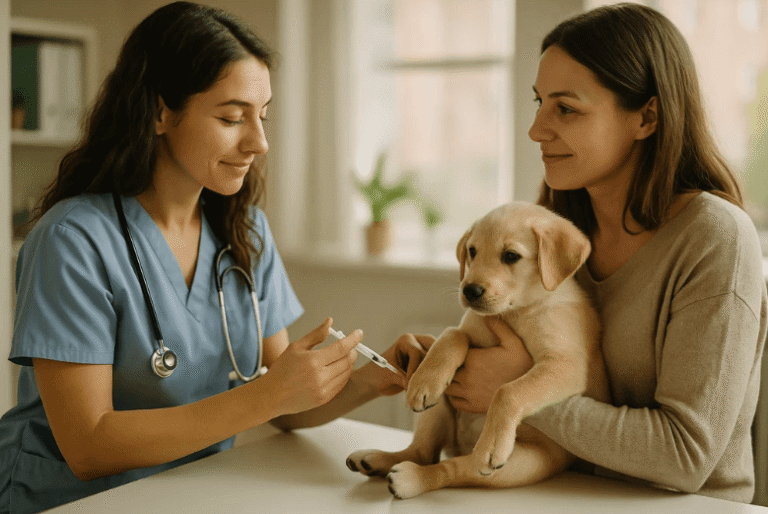
You are probably trying to keep your pet calm, stay on top of vaccine schedules, and avoid the circus that can come with a clinic visit. That is a real concern, especially if your dog shakes in the waiting room, your cat disappears the second the carrier comes out, or you have more than one animal and the whole trip turns into a production. In home pet vaccinations can make that process easier, but most people still pause at the same point. Whether you are comparing options like Toronto in home pet hospice or routine mobile veterinary care, what actually happens during the visit, and how are the records handled afterward?
The short answer is simple. A mobile veterinarian comes to your home, reviews your pet’s history, performs an exam, gives the vaccines that are appropriate, and documents everything in a medical record. You should receive vaccine details that include the product used, the date given, and the due date for boosters when needed. If rabies vaccination is given, the record usually also includes the rabies certificate and tag information, since rabies rules are often set by state or local law.
Mobile pet vaccination visits are built around safety, comfort, and documentation
A home visit feels more relaxed for many pets, but it is still a medical appointment. The veterinarian does not just walk in and give shots. First comes a review of your pet’s age, health status, lifestyle, prior vaccine history, and any recent illness. That matters because vaccines are not one size fits all. A healthy indoor senior cat may need a different plan than a young dog who goes to daycare, the park, and the groomer every week.
You might expect the main benefit to be convenience, and that is true, but comfort changes the quality of the visit. Pets that panic in cars or waiting rooms often show more normal behavior at home. That gives the veterinarian a better chance to examine them properly before deciding which vaccines are appropriate. If your pet has had a prior vaccine reaction, even mild swelling or vomiting, that discussion should happen before anything is given.
Most visits follow a clear flow. The veterinarian confirms your pet’s identity, reviews records, performs a physical exam, and then gives only the vaccines that fit your pet’s needs. Afterward, you should get instructions on what is normal, such as mild soreness or sleepiness, and what is not, such as facial swelling, hives, trouble breathing, or repeated vomiting. If rabies vaccination is part of the visit, the vet must follow legal requirements for administration and recordkeeping. The CDC outlines core rabies guidance for veterinarians on its rabies vaccination and recordkeeping page.
Vaccine records from house call vet services need to be accurate and easy to access
This is the part people worry about after the visit is over. You need proof for boarding, grooming, daycare, travel, licensing, or a new landlord, and you do not want to dig through texts and scraps of paper when someone asks for it. Good record handling solves that problem before it starts.
A proper vaccine record usually includes your pet’s name, species, breed, age or date of birth if known, the owner’s name and address, the vaccine manufacturer, lot number, expiration date, date administered, and the name of the veterinarian who gave it. For rabies, you may also receive a signed rabies certificate and tag number. Keep both digital and paper copies if possible.
If you are planning a move or travel, records matter even more. Interstate and international travel can require health certificates or extra steps that go beyond routine vaccines. In those cases, you may need a USDA accredited veterinarian. The USDA explains that process here: find out when an accredited veterinarian is required for pet travel.
Problems usually come up when records are incomplete, the pet was vaccinated without an exam by someone who cannot legally issue the needed documents, or the owner assumes a reminder text is the same as an official medical record. It is not. If your dog bites someone, if your cat needs emergency boarding, or if your pet must cross state lines, incomplete records create stress fast. That is why at home pet vaccines should always be tied to formal medical documentation.
In home vaccinations and clinic visits each have strengths
| Consideration | In Home Vaccinations | Clinic Visit |
|---|---|---|
| Pet stress level | Often lower for anxious pets in familiar surroundings | Often higher due to travel, noise, smells, and waiting rooms |
| Convenience | Strong for multi pet homes, seniors, and busy schedules | Requires transport, carrier setup, and travel time |
| Record handling | Should include full medical record, vaccine details, and rabies certificate if given | Usually printed or emailed before you leave or posted to a portal |
| Emergency support on site | Limited compared with a full hospital setting | Stronger access to equipment, staff, and immediate treatment |
| Best fit | Anxious pets, households with transport barriers, routine preventive care | Pets needing diagnostics, procedures, or urgent hospital care |
The right choice depends on your pet, not on a trend. A healthy dog due for routine boosters may do very well with a mobile veterinarian. A pet with fever, collapse, severe vomiting, or trouble breathing needs a hospital setting, not a house call for vaccines.
See also: The Daily Edge for Men’s Health: Why a Mens Multivitamin Matters
Clear steps help you get the most from a home vaccination appointment
1. Gather your current records before the visit. Pull together past vaccine certificates, medication lists, prior reactions, and any travel or boarding forms you know you will need. If records are missing, say so early. Guessing leads to overvaccination or delays.
2. Ask exactly what documents you will receive. Before the appointment ends, confirm that you will get the medical record, vaccine details, due dates, and rabies certificate if applicable. Ask whether records will be emailed, uploaded to a portal, or printed. Save them in more than one place.
3. Watch your pet for 24 hours and report anything unusual. Mild fatigue can be normal. Facial swelling, repeated vomiting, collapse, hives, or breathing changes are not. Fast reporting protects your pet and helps shape future vaccine decisions.
Good home vaccine care should leave you with clarity, not more loose ends
Your pet does not need the added stress of a difficult clinic trip if a house call is a safe fit, and you do not need the added stress of messy paperwork afterward. A well run home visit should cover both. Your pet gets an exam and the right vaccines, and you get records that hold up when a groomer, boarding facility, landlord, or travel authority asks for proof.
If you are considering in home pet vaccinations, choose a provider who treats documentation with the same care as the medicine itself. That is what turns convenience into real peace of mind.