

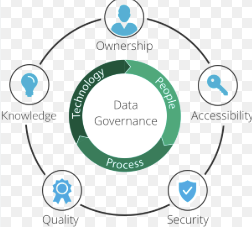
The governance challenge at scale
As organizations grow, schemas become the lingua franca between teams that produce and consume data. Without a shared approach to schema design and evolution, small changes cascade into broken pipelines, stalled analytics, and unpredictable business outcomes. Practical schema governance is not about rigid control; it is about creating repeatable patterns that protect consumer expectations while enabling producers to iterate. The goal is a balance between safety and speed: enforce what matters, automate what you can, and give teams a clear path for exceptions.
Principles that guide policy
Start by defining core principles that everyone can agree on. Prioritize backward compatibility, clear semantic meaning, and discoverability. Backward compatibility reduces churn for existing consumers and is often the lowest-friction path for evolution. Semantic clarity avoids accidental misuse of fields that have similar names but different meanings. Discoverability through a central registry or catalog reduces duplication and helps new teams onboard quickly. These principles should be expressed as policy, not as code alone, and referenced in onboarding, design reviews, and documentation.
Contracts and ownership in practice
Effective governance names both schema owners and downstream consumers. Owners are responsible for designing, documenting, and communicating changes; consumers declare the behavior they rely on. This mutual accountability reduces guesswork and accelerates conflict resolution. As part of this model, teams should adopt lightweight agreements to capture expectations; for example, a producer might promise that a field will remain present or that newly added optional fields will not affect existing consumers. Embedding these guarantees into automated checks and tests enshrines them in the delivery pipeline rather than relying on email threads. A short, searchable entry in the catalog that highlights the key commitments makes it easy for others to find and act on them. Use a concise anchor for visibility by referencing schema data contracts when documenting these promises so they appear in search results and guide implementation.
Versioning, compatibility, and evolution pathways
Designing clear evolution pathways avoids one-off hacks. Semantic versioning for APIs is common; apply similar thinking to data schemas. Tag stable versions and provide migration guidance for consumers. Adopt compatibility rules such as allowing new optional fields, forbidding removal of required fields, and prohibiting type narrowing without explicit migration plans. For event schemas, favor additive changes and provide schema translators where necessary. When a breaking change is unavoidable, prepare a deprecation schedule, publish a migration plan, and offer a transition window with compatibility shims. Communicate timelines and have a defined escalation path for urgent changes that need to move faster than the standard cadence.
Tooling and automation to enforce rules
Automation converts governance from an annual policy review into a live safety net. Integrate schema checks into CI pipelines to validate changes against registered consumers and compatibility rules. Use schema registries that support contract testing, providing machine-readable schemas that can be pulled by producers and consumers. Validate payloads at the source and enforce type checks in staging environments before promotion. Generate changelogs automatically from commit messages and link them to catalog entries. Where possible, integrate contract tests into service test suites so that producers run consumer expectations during development. These measures reduce surprises and shorten feedback loops.
Cross-team workflows and collaboration
Define a clear workflow for proposing, reviewing, and approving schema changes. Lightweight change proposals should include intent, compatibility impact, sample payloads, and a rollback plan. Establish a rotation of reviewers from both producer and consumer teams to ensure diverse perspectives and reduce bottlenecks. Use standard channels for notification—catalog updates, scheduled governance meetings, and automated alerts when compatibility checks fail. Encourage early engagement by rewarding teams that involve key consumers before making changes. When disputes arise, resolve them using a pre-agreed escalation process that focuses on consumer impact and business priorities.
Testing and observability for reliability
Testing strategies should include unit tests, integration tests, and consumer-driven contract tests. Mock schemas during development to simulate downstream expectations, and run contract tests in CI to catch regressions early. Observability complements tests; monitor schema usages, track which fields are read by which jobs, and measure the rate of schema-related failures. Alerting on sudden changes in field access patterns or an increase in parsing errors provides an early warning system. Combine telemetry from producers and consumers to identify shadowed fields and opportunities to consolidate or refactor schemas.
Documentation, discoverability, and championing
A governance program succeeds when it is visible and usable. Invest in a central catalog that surfaces schema definitions, version history, ownership, and guarantees. Link schema entries to example queries, transformation logic, and performance characteristics so consumers can build with confidence. Train team leads on governance policies and cultivate champions who coach others through design reviews. Encourage a culture where schema changes are viewed as collaborative design work, not unilateral decisions. Celebrate successful migrations and highlight metrics that show reduced breakages and faster onboarding.
Measuring success and iterating
Define measurable outcomes: fewer production incidents caused by schema changes, faster time to migrate consumers, and increased reuse of canonical schemas. Collect baseline metrics and review them quarterly to decide what to tighten or loosen. Use postmortems to learn from failures and translate those learnings into improved checks, updated policies, or new automation. Governance should be iterative: add constraints when teams keep tripping over the same failures, and remove friction where rules no longer provide value.
Next steps for teams
Start small by enforcing a handful of compatibility rules and integrating basic schema validation into CI. Build the catalog incrementally, populate it with high-value schemas, and expand governance rituals as the program demonstrates value. Practical schema governance is a combination of clear principles, shared ownership, dependable tooling, and visible outcomes. When those pieces come together, teams move faster with lower risk, and data becomes a reliable asset that multiple teams can trust and build upon.