

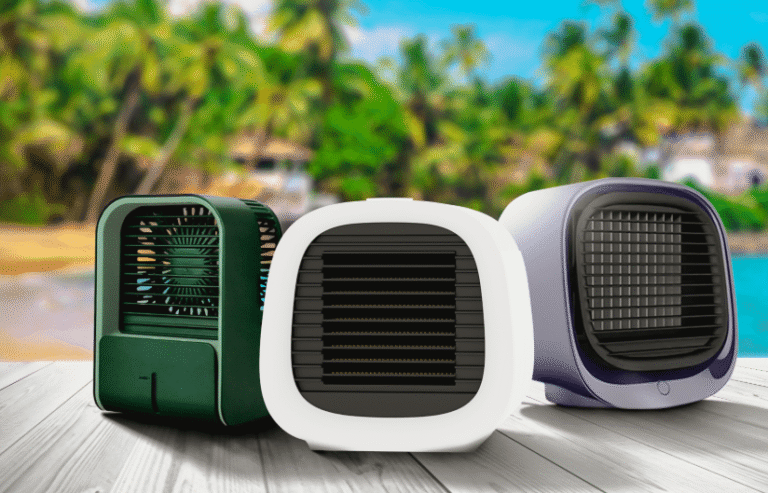
In a world of fixed infrastructure and permanent installations, the portable evaporative cooler stands out as one of the most versatile and immediately practical cooling solutions available. No ductwork, no complex installation, no waiting for a contractor — simply position the unit where cooling is needed, connect it to a standard power outlet and water supply, and enjoy measurably cooler, fresher air within minutes. For homeowners, business operators, event organisers, and facility managers who need flexible, cost-effective cooling without the commitment of a permanent system, a portable evaporative cooler is often the ideal answer.
But not all portable coolers are created equal. The market offers a wide spectrum of product quality, from lightweight consumer units suited to modest residential use to robust, high-capacity professional coolers designed for sustained performance in demanding commercial and industrial environments. Understanding what distinguishes a genuinely effective portable evaporative cooler from an underpowered alternative is the first step toward making a purchase that delivers on its promise.
The Science Behind Evaporative Cooling in Portable Units
A portable evaporative cooler works by drawing warm ambient air through water-saturated cooling media — typically a high-surface-area cellulose or polymer pad — where the process of water evaporation absorbs heat energy from the air, lowering its temperature significantly before it is discharged into the space. The physics of this process are straightforward: evaporating one litre of water absorbs approximately 680 watt-hours of heat energy from the air passing through it — a remarkable and entirely natural cooling mechanism that requires only a fan, a water pump, and quality cooling media to harness.
The temperature drop achieved depends on two variables: the ambient temperature and the relative humidity of the incoming air. In hot, dry conditions — as experienced across much of India, the Middle East, and large parts of Africa, Australia, and the Americas — evaporative coolers can reduce air temperature by 10 to 15 degrees Celsius or more. As humidity rises, the achievable temperature drop decreases, because the air’s capacity to absorb additional water vapour is already partially occupied. In genuinely humid conditions, indirect evaporative cooling technology or two-stage systems offer solutions that maintain effectiveness regardless of outdoor humidity.
See also: Modern & Durable Patio Enclosures Brisbane for Outdoor Living
Key Advantages of a Portable Evaporative Cooler
The most immediate and tangible advantage of a portable evaporative cooler is its energy efficiency. Compared to a conventional portable air conditioner of similar cooling output, a portable evaporative cooler consumes 70 to 90 percent less electricity. For continuous use in commercial or industrial environments, this difference translates into dramatically lower operating costs over the course of a cooling season.
Flexibility is the defining practical advantage. Portable evaporative coolers on castor wheels can be repositioned to follow occupants, address changing thermal conditions, or provide targeted spot cooling to specific work areas or hotspots. On a factory floor where heat is generated unevenly — near furnaces, press machines, or welding stations — the ability to direct cooling precisely where it is needed is enormously valuable. In homes and offices, the freedom to move cooling from room to room as occupancy and sun exposure change throughout the day adds genuine utility that fixed systems cannot match.
The provision of 100 percent fresh outside air is another significant benefit. Unlike portable air conditioners and conventional split systems, which recirculate the same indoor air through a refrigerant coil, an evaporative cooler continuously introduces fresh air from outside, flushing out pollutants, odours, and stale air in the process. In workshops, kitchens, food processing facilities, and any environment where air quality matters, this ventilation characteristic is especially valuable.
Choosing the Right Portable Evaporative Cooler for Your Application
Selecting the right portable evaporative cooler begins with a clear understanding of the cooling requirement. The primary specification to consider is airflow capacity — typically measured in cubic metres per hour — which determines the rate at which the cooler can exchange the air volume of the target space. A general guideline for effective evaporative cooling is to achieve a full air change every one to two minutes in the cooled area, which requires matching the cooler’s airflow rating to the space volume accordingly.
Build quality and cooling pad media are critical differentiators. High-density cellulose cooling pads with efficient water distribution ensure maximum evaporation surface area and sustained cooling performance. Metal cabinet construction — particularly rust-proof steel — outperforms plastic housing significantly in durability and longevity, especially in wet operating conditions.
Fan design affects both performance and noise levels. Centrifugal blowers provide stronger, more consistent airflow with better static pressure handling, making them superior for larger spaces and applications where the cooler must project air effectively over distance. Motor quality and bearing design determine how reliably the unit operates over thousands of hours of use.
Portable Evaporative Coolers in Commercial and Industrial Settings
While portable evaporative coolers are well suited to residential use, their most impactful applications are often in commercial and industrial environments. Manufacturing facilities, logistics warehouses, printing plants, food processing operations, textile factories, and agricultural settings all present cooling challenges that portable evaporative units can address effectively and economically.
The plug-and-play nature of portable coolers makes them particularly valuable for businesses that need to deploy cooling rapidly, expand coverage as production volumes change, or provide temporary cooling during planned maintenance of fixed HVAC systems. Multiple units can be coordinated to provide comprehensive coverage of large open floor areas, with positioning optimised for the specific airflow patterns and heat source locations within the facility.
Maximise Cooling Effectiveness with Proper Ventilation
A portable evaporative cooler performs best when the space being cooled has adequate ventilation to allow warm, humid air to escape as fresh, cool air is introduced. Opening windows, doors, or using exhaust fans on the side of the building opposite the cooler creates the cross-ventilation that maximises temperature reduction and prevents humidity buildup. In enclosed spaces with inadequate exhaust, the cooler’s effectiveness diminishes as indoor humidity rises. Planning ventilation as part of the cooling strategy is as important as selecting the right cooler.
Discover Arctic’s Range of Portable Evaporative Coolers
Arctic free-flow portable evaporative coolers are engineered for high performance across residential, commercial, and industrial applications — available in multiple configurations including standard free-flow, side discharge, and top discharge spot cooler models to suit different space layouts and airflow requirements. Visit yesarctic.com to explore the full range and speak with a cooling specialist about the right solution for your needs.