

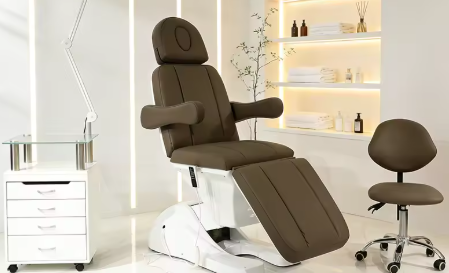
The physical demands of facial work are often underestimated. Estheticians spend hours each day bent over clients in sustained awkward postures that can lead to chronic pain and career-ending injuries. Investing in properly designed facial chairs is one of the most impactful steps a studio owner can take to protect their team’s health and productivity.
The Hidden Physical Demands of Facial Work
Neck and Shoulder Strain From Poor Positioning
When a chair positions the client too low or at an angle that requires the esthetician to bend forward excessively, the neck and shoulders absorb enormous cumulative stress. A 60-minute facial session in poor posture can feel equivalent to hours of heavy lifting in terms of muscular fatigue.
Studies on manual therapy workers consistently show that equipment that promotes neutral posture dramatically reduces injury rates and sick days. A chair that adjusts to the correct working height for each esthetician is not a luxury — it is a safety device.
- Height adjustment eliminates excessive bending
- Full recline reduces client head elevation strain
- Arm support reduces shoulder fatigue
- Stable surfaces prevent compensating muscle tension
Building a Culture of Equipment Safety
Finding the Correct Working Height
The ideal working height positions the esthetician with their arms slightly bent at the elbow when performing facial work, with no need to shrug their shoulders. For most practitioners, this means the client’s face should be at approximately mid-chest height. A hydraulic or electric chair allows this to be calibrated precisely for each therapist. For professional-quality results, investing in facial chairs designed for commercial use makes all the difference.
Chair Features That Actively Reduce Injury Risk
Look for chairs with a 360-degree rotating backrest or offset headrest that allows the esthetician to access either side of the face without moving their feet. This reduces the number of position changes needed during a treatment and minimizes the risk of awkward reaching or twisting.
Building a Culture of Equipment Safety
Studio owners should train staff to adjust chairs before every session rather than adapting their body to the equipment. Many estheticians skip adjustments to save time, unknowingly accumulating injuries over months. A brief checklist posted in each treatment room can make ergonomic setup a consistent habit.
See also: Protecting Business Data Using Continuous Authentication Strategies
Frequently Asked Questions
How can I tell if my current chairs are causing esthetician injuries?
Survey your team about pain or discomfort they experience during or after work. Neck, shoulder, and lower back pain that improves on days off is a strong indicator of poor equipment ergonomics.
What certifications should ergonomic facial chairs carry?
Look for CE certification in European markets and UL or ETL listings for electrical components. These certifications confirm the chair meets safety standards for professional use.
Is it worth hiring an ergonomics consultant for my studio?
For larger studios with multiple estheticians, yes. An occupational health consultant can assess workstation setups and recommend adjustments that prevent costly injury claims.
Conclusion
Facial chair ergonomics is a business issue, not just a health issue. When your team works in comfort and safety, they perform better, call in sick less often, and build longer careers with your studio. Protect your most valuable asset — your people — by choosing chairs designed with their bodies in mind.