

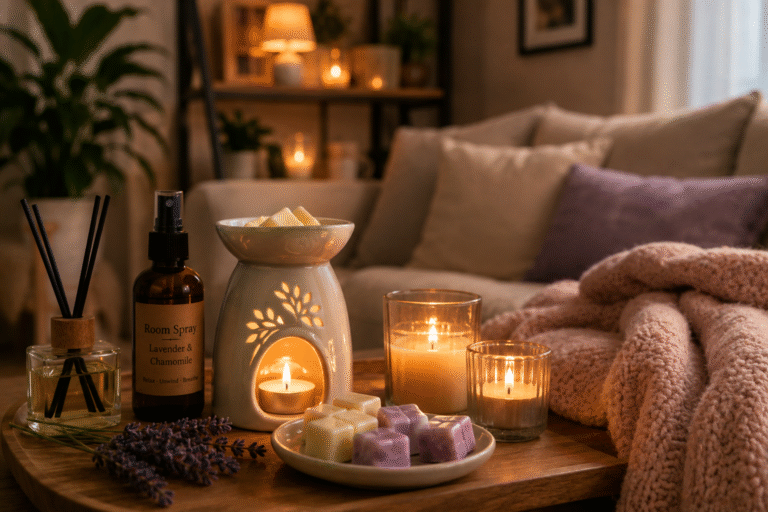
I used to think a relaxing home just meant tidy and quiet. Then I stayed at a friend’s place one weekend, and the second I walked through her door, something in me just… settled. Took me a while to realize it wasn’t the sofa or the lighting. It was the smell. She’d had something warm and soft burning in the corner the whole afternoon, and by the time I left I’d asked her three times what it was.
That’s the thing about home fragrance nobody tells you upfront: it does half the work of making a space feel calm before you’ve even sat down. This guide’s really just about how to actually build that on purpose, rather than stumbling into it like I did.
Why Scent Affects Mood
There’s a reason smell hits differently than sound or sight. It goes almost straight to the part of the brain tied to memory and emotion, skipping a lot of the processing other senses go through first. Which is probably why one specific smell can drag you back to a childhood kitchen in half a second, way faster than a photo ever could.
So when a room smells like something warm and familiar, your body reads that as safe before your brain’s even caught up. Sharp, chemical, or overly strong scents do the opposite — they can put people on edge without them clocking why. Not dramatic, just… a background hum of unease.
See also: How Home Automation Simplifies Daily Living
Choosing Relaxing Fragrance Notes
Lavender gets mentioned constantly for good reason; it genuinely works for a lot of people. But it’s not the only option, and honestly, not everyone likes it (my mom can’t stand it; she thinks it smells medicinal).
Sandalwood and warm vanilla tend to land well for people wanting something cozier rather than clean. Chamomile is underrated too, softer than lavender, and still calming. If you lean toward fresher scents, something like eucalyptus with a bit of mint can feel relaxing in a different way, more like a deep breath than a warm hug. There’s no single “right” note here. It really is trial and error until something clicks.
Best Home Fragrance Products
Wax melts are probably the easiest entry point if you want control without much fuss, no flame, easy to swap scents, and you can go stronger or lighter just by adjusting how much wax you use. Reed diffusers work if you want something that just runs quietly in the background with zero effort, though they’re harder to adjust once they’re set up.
Candles still have their place, mostly for the ritual of it, lighting one at the end of the day carries its own kind of calm, separate from the scent itself. Room sprays are the quick fix, good for a burst of scent before guests arrive, but they fade fast. None of these is objectively the best. Depends entirely on how much effort you want to put in versus how much control you want over the result.
Creating a Spa-Like Atmosphere
Scent alone won’t get you there, but it’s most of the way. Pair something like eucalyptus or a light floral with low lighting and you’re most of the way to that spa feeling without spending anything on the actual room.
Layering helps here too; a candle burning while a diffuser runs quietly somewhere else in the same room builds depth rather than one flat note hitting you all at once. Temperature matters more than people think as well. A slightly warm room holds scent better than a cold one, which is part of why fragrance always feels stronger in winter with the heating on.
Seasonal Fragrance Ideas
Preferences shift with the seasons whether people notice it or not. Winter pulls toward spice, cinnamon, clove, and that whole baked-something category that just feels right when it’s dark outside by 4pm.
Spring nudges things toward florals and green, fresh notes, almost mirroring what’s happening outside the window. Summer is usually citrus, something lighter that doesn’t sit heavy in a warm room. Autumn sits in between, often woody or slightly spiced without going full winter yet. None of this is a rule, though; plenty of people just run their favorite scent all year, and that’s completely fine too.
Fragrance Safety Tips
A few basics worth keeping in mind. Never leave a candle or warmer running unattended, obviously, but people forget this more than you’d expect, especially with electric warmers that feel “safe” because there’s no visible flame.
Keep anything scented away from curtains, paper, or anything flammable, and give rooms a bit of airflow now and then rather than sealing scent in completely for days. If anyone in the house has asthma or sensitivities, lighter, natural fragrance oils tend to sit better than heavily synthetic ones. And check what you’re actually buying; some cheaper products cut corners on oil quality, which shows up fast as headaches or that slightly off chemical note instead of the cozy smell you were going for.
Conclusion
Building a relaxing home fragrance experience isn’t really about buying more stuff. It’s picking the right notes for how you actually want to feel, layering a couple of methods instead of relying on one, and paying a bit of attention to the season and the room itself. Get that right, and a house starts to feel calm the second someone walks through the door, the same as it did for me that one weekend, before I even knew what was making it happen.