

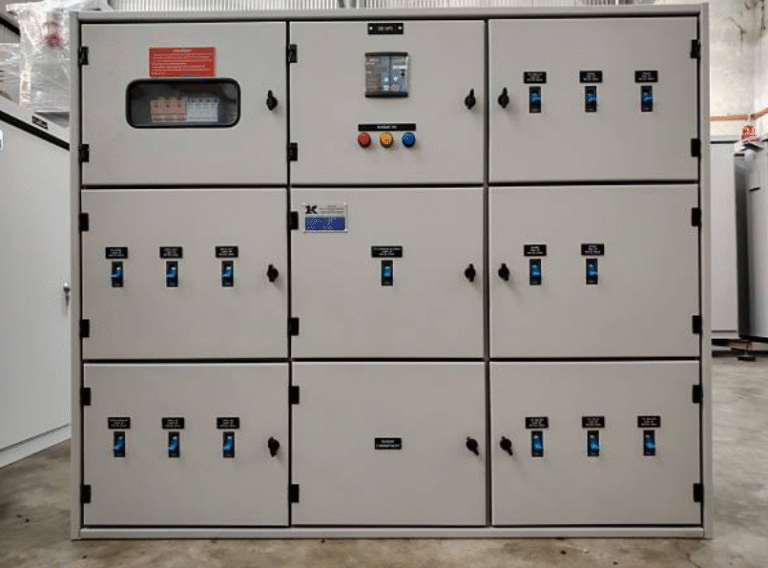
A low voltage switchboard plays a critical role in modern electrical infrastructure by ensuring power is distributed safely, efficiently, and reliably. In facilities where continuous power is essential, redundancy is a key design principle that minimizes downtime and prevents system failures.
From commercial buildings and industrial plants to healthcare and data centers, electrical system redundancy relies heavily on how low voltage switchboards are designed, configured, and maintained.
By enabling multiple power paths, isolating faults, and supporting backup systems, low voltage switchboards form the backbone of resilient electrical networks.
Understanding Electrical System Redundancy
Electrical system redundancy refers to the practice of incorporating additional components or alternative power paths so that operations can continue even when part of the system fails. Instead of relying on a single source or circuit, redundant systems are designed to withstand faults, maintenance interruptions, and unexpected load changes.
Key objectives of redundancy include:
- Maintaining uninterrupted power supply
- Reducing the risk of complete system shutdown
- Improving operational safety and reliability
- Supporting critical loads during emergencies
- Allowing maintenance without service disruption
Low voltage switchboards are central to achieving these objectives because they manage how power flows between sources, loads, and backup systems.
Role of Low Voltage Switchboards in Power Distribution
Low voltage switchboards are assemblies that house circuit breakers, busbars, protection devices, meters, and control components. They operate at voltages typically up to 1000 volts AC and distribute electricity from incoming feeders to multiple outgoing circuits.
Their role in redundancy includes:
- Managing multiple incoming power sources
- Segregating critical and non critical loads
- Providing controlled switching between primary and backup supplies
- Enabling fault isolation without affecting the entire system
Through intelligent layout and protective coordination, switchboards ensure redundancy is functional rather than theoretical.
Supporting Multiple Power Sources
One of the primary ways low voltage switchboards support redundancy is by accommodating multiple power sources. These sources may include utility feeders, generators, or renewable energy systems.
Common configurations include:
- Dual utility supply arrangements
- Utility plus standby generator systems
- Utility plus UPS backed systems
- Hybrid systems incorporating solar or energy storage
The switchboard allows seamless or controlled transfer between sources, ensuring that if one supply fails, another can take over with minimal disruption.
Integration with Automatic Transfer Systems
Redundancy often depends on the ability to switch power sources quickly and safely. Low voltage switchboards are designed to integrate with automatic transfer switches and manual changeover mechanisms.
Benefits of this integration include:
- Rapid response to power outages
- Reduced reliance on manual intervention
- Improved safety during source transitions
- Consistent power delivery to critical circuits
By coordinating with transfer systems, switchboards ensure that backup power is available exactly when needed.
Load Segregation for Critical Operations
Not all loads within a facility carry the same level of importance. Low voltage switchboards enable redundancy by separating critical loads from non essential ones.
This segregation allows:
- Priority power delivery to essential systems
- Controlled load shedding during power constraints
- Optimized use of backup power resources
- Reduced risk of overload during emergencies
Critical systems such as fire safety, medical equipment, data servers, and security infrastructure benefit significantly from this structured approach.
Fault Isolation and Continuity of Supply
Electrical faults are inevitable in complex systems. Redundancy is effective only if faults can be isolated without affecting the entire network. Low voltage switchboards achieve this through sectionalized busbars and coordinated protective devices.
Key features supporting fault isolation include:
- Individual circuit breakers for outgoing feeders
- Bus section circuit breakers
- Selective tripping coordination
- Clear physical separation of sections
These features ensure that a fault in one area does not cascade into a full system outage.
Use of Bus Sectionalization
Bus sectionalization divides the main busbar into separate sections, each capable of operating independently or in parallel. This design is especially important in facilities requiring high availability.
Advantages of bus sectionalization include:
- Improved system flexibility
- Enhanced maintenance capability
- Reduced fault impact zones
- Increased operational resilience
Low voltage switchboards with sectionalized buses allow one section to remain energized while another is isolated for repair or inspection.
See also: How Technology Is Transforming the Entertainment Industry
Redundancy in Control and Protection Devices
Redundant power paths are only effective when supported by reliable control and protection systems. Modern low voltage switchboards incorporate advanced relays, meters, and monitoring devices to support redundancy.
These devices help by:
- Providing real time system status
- Detecting abnormalities early
- Enabling coordinated protection actions
- Supporting predictive maintenance strategies
In some designs, control circuits themselves are redundant to ensure continued monitoring even during partial system failures.
Support for Uninterruptible Power Supply Systems
Uninterruptible power supply systems are a cornerstone of redundancy for sensitive equipment. Low voltage switchboards from Meta Power Solutions act as the interface between utility power, UPS units, and downstream loads.
Their role includes:
- Distributing conditioned power from UPS systems
- Bypassing UPS units during maintenance
- Protecting UPS outputs from downstream faults
- Coordinating with generators for extended outages
This integration ensures continuous power quality and availability for mission critical applications.
Enhancing Redundancy Through Modular Design
Modular low voltage switchboards allow systems to be expanded or reconfigured without major disruptions. This flexibility supports redundancy by making it easier to add backup feeders or alternate supply paths.
Benefits of modular design include:
- Scalable redundancy solutions
- Faster installation and upgrades
- Reduced downtime during modifications
- Improved long term adaptability
As power demands grow, modular switchboards help maintain redundancy without compromising existing operations.
Redundancy and Maintenance Planning
Effective redundancy is closely tied to maintenance strategies. Low voltage switchboards are designed to support maintenance without shutting down the entire system.
Maintenance friendly features include:
- Draw out circuit breakers
- Isolated maintenance sections
- Clear labeling and access points
- Integrated safety interlocks
These features allow components to be serviced or replaced while alternate paths continue to supply power.
Supporting Compliance and Safety Standards
Electrical redundancy is often mandated by industry standards and regulations. Low voltage switchboards are engineered to comply with safety, performance, and reliability requirements.
Compliance considerations include:
- Fault level withstand ratings
- Short circuit protection coordination
- Thermal management
- Fire and arc fault mitigation
Meeting these standards ensures that redundancy measures are both effective and safe.
Role in Industrial and Commercial Applications
Different environments place different demands on redundancy. Low voltage switchboards are customized to meet the specific needs of various sectors.
Examples include:
- Hospitals requiring continuous life support power
- Data centers demanding zero downtime
- Manufacturing plants needing process continuity
- Commercial buildings prioritizing occupant safety
In each case, the switchboard configuration is tailored to support appropriate levels of redundancy.
Monitoring and Diagnostics for Redundant Systems
Modern low voltage switchboards often include digital monitoring and communication capabilities. These tools enhance redundancy by providing insight into system performance.
Monitoring capabilities support:
- Early fault detection
- Load balancing across redundant paths
- Energy usage optimization
- Faster recovery from failures
By understanding system behavior in real time, operators can ensure redundancy remains effective under changing conditions.
Future Trends in Redundant Switchboard Design
As electrical systems become more complex, redundancy strategies continue to evolve. Low voltage switchboards are adapting to support smarter and more resilient networks.
Emerging trends include:
- Integration with building management systems
- Enhanced digital protection schemes
- Support for decentralized energy sources
- Improved arc fault detection technologies
These developments further strengthen the role of switchboards in reliable power distribution.
Conclusion
Electrical system redundancy is essential for maintaining reliability, safety, and operational continuity in modern facilities. Low voltage switchboards play a foundational role in enabling redundancy by managing multiple power sources, isolating faults, supporting backup systems, and facilitating maintenance without disruption.
Through thoughtful design, advanced protection, and flexible configurations, they ensure that power remains available even in the face of failures or planned interruptions. As power systems continue to evolve, low voltage switchboards will remain central to building resilient and dependable electrical infrastructures.